AI Antidetect Browsers Make Large-Scale Account Fraud Easier to Run
- Gate
- AI & ML
- Departs
- Passengers
- 895
Kameleo, AdsPower and MultiLogin combine browser identity spoofing with automation, making account fraud and coordinated manipulation easier to scale.
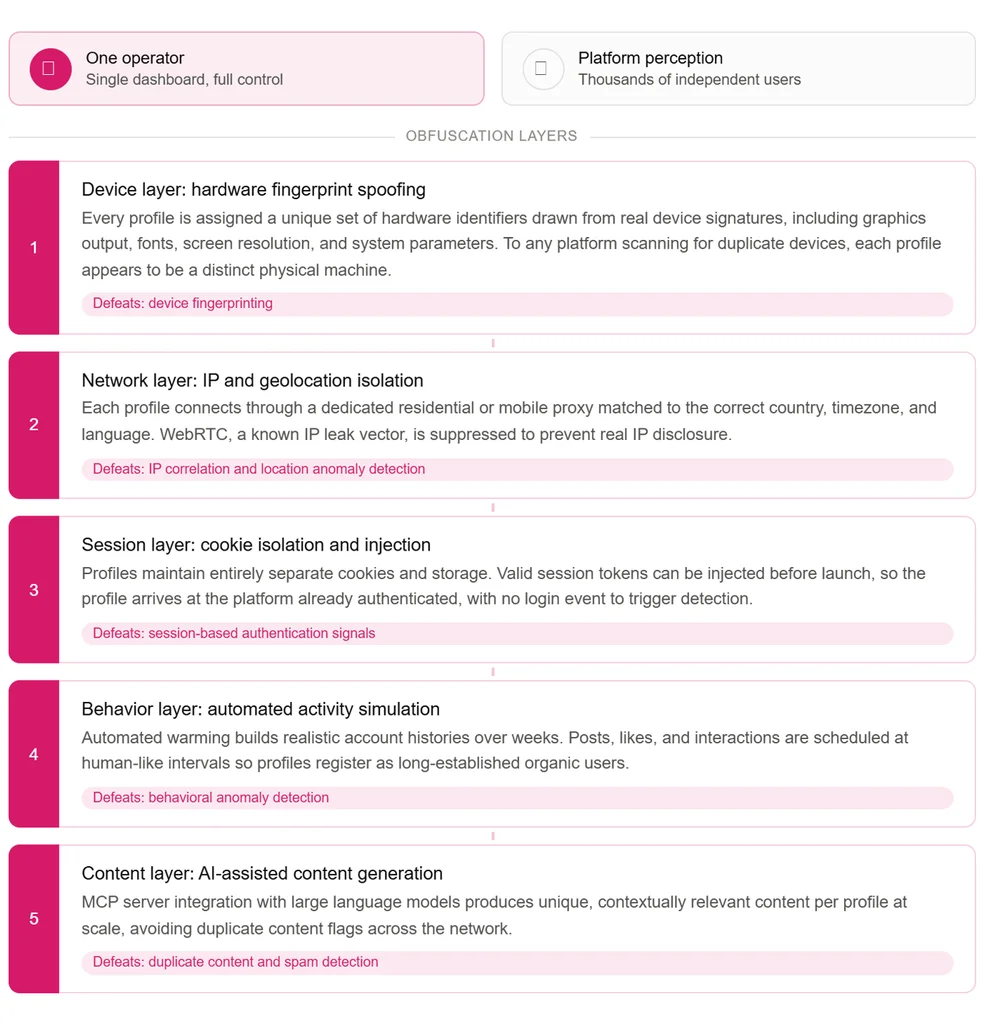
Antidetect browsers give one operator a way to run many online accounts that appear to belong to separate people and devices. Their core functions—browser fingerprint changes, proxy assignment and isolated sessions—have legitimate uses in marketing, e-commerce and privacy work. The same features can also support account theft, payment fraud, artificial engagement and coordinated manipulation. What has changed is how readily these tools combine identity controls with automation and AI-assisted content workflows.
Research on three products—Kameleo, AdsPower and MultiLogin—describes a commercial software category with profile management, technical documentation and customer support. The report also cites underground forum listings, account-sale posts and criminal tooling that connect these products to fraud operations. That evidence shows active interest and documented use; it does not establish that every customer or product feature is used for abuse.
What an antidetect browser changes
Websites collect many signals from a browser. These can include canvas rendering, WebGL details, available fonts, screen dimensions, time zone, user agent and hardware characteristics. Services compare those signals to estimate whether accounts share a device or operator. An antidetect browser alters the signals assigned to each profile, aiming to make separate profiles look like separate devices.
Profiles can also keep cookies, local storage and session data apart. Operators may assign a proxy to each profile, so its network address and apparent location fit the profile’s other settings. Some products provide controls for WebRTC, which can expose a device’s real IP address even when a proxy is in use. The practical goal is consistency: a profile should present a plausible combination of browser, device and network details.
This setup matters because many abuse checks look at account behavior and device identity. If the browser presents a different identity for each account, those checks have less obvious evidence that the accounts are linked. A convincing profile can also build activity over time before it is used for a more sensitive task. That makes detection harder, though it does not make an account invisible or guarantee that a service will accept it.
The software sits within a wider ecosystem. The report describes credential-stealing malware that captures session cookies, services that transfer credentials into antidetect profiles, residential proxy providers and automated CAPTCHA-solving tools. Together, these components can help an operator move from stolen credentials to account access while reducing the chance that a familiar device or location change triggers an extra check.
Why sessions can matter more than passwords
A stolen password usually creates a login event, which can trigger a challenge or alert. A session cookie may represent a user who has already authenticated. If an attacker inserts valid session data into a prepared browser profile, the service may receive a request that appears to continue an existing session instead of beginning a new one.
Kameleo documents an API that accepts cookie objects, including session identifiers, refresh tokens and authentication flags. The source cites separate security research describing the use of antidetect browsers with stolen digital fingerprints and account credentials. A forum post described in the report lists Kameleo, AdsPower and MultiLogin among browser environments targeted by an infostealer with remote access capabilities. The advertised malware sought session cookies, authentication tokens, cryptocurrency wallet data, API keys and two-factor authentication credentials.
The same research describes browser-in-the-middle phishing. In this arrangement, a phishing service relays a victim’s sign-in details to the real service through an automated browser. The browser can use a residential proxy and a profile configured to resemble a device in the victim’s region. If the relay captures a live session, the attacker may gain access without a typical password-only login pattern.
These techniques create a monitoring problem for companies that rely on login alerts alone. A session can look established even when control has changed hands. Teams need to consider how their systems identify unusual session creation, cookie use, device changes and account activity after authentication. Multi-factor authentication remains useful, but session theft can bypass checks that occur only at sign-in.
Kameleo: browser-level control and session handling
Kameleo modifies browser behavior at a deeper level than simple surface settings, according to the product material discussed in the source. It draws fingerprints from real-device signatures and exposes controls for signals such as WebRTC and network connections. Its documentation also describes preventing non-proxied UDP traffic, which could otherwise reveal a user’s network identity.
The report links Kameleo to underground forum discussions and proxy listings that advertise account farming, CAPTCHA bypass and evasion of bot defenses. It also points to a Kameleo guide on automating likes across multiple Facebook accounts. That guide is relevant because it shows how profile separation and automation can be combined for repetitive activity. A product capability does not by itself prove malicious intent, but the same mechanics can support coordinated artificial engagement.
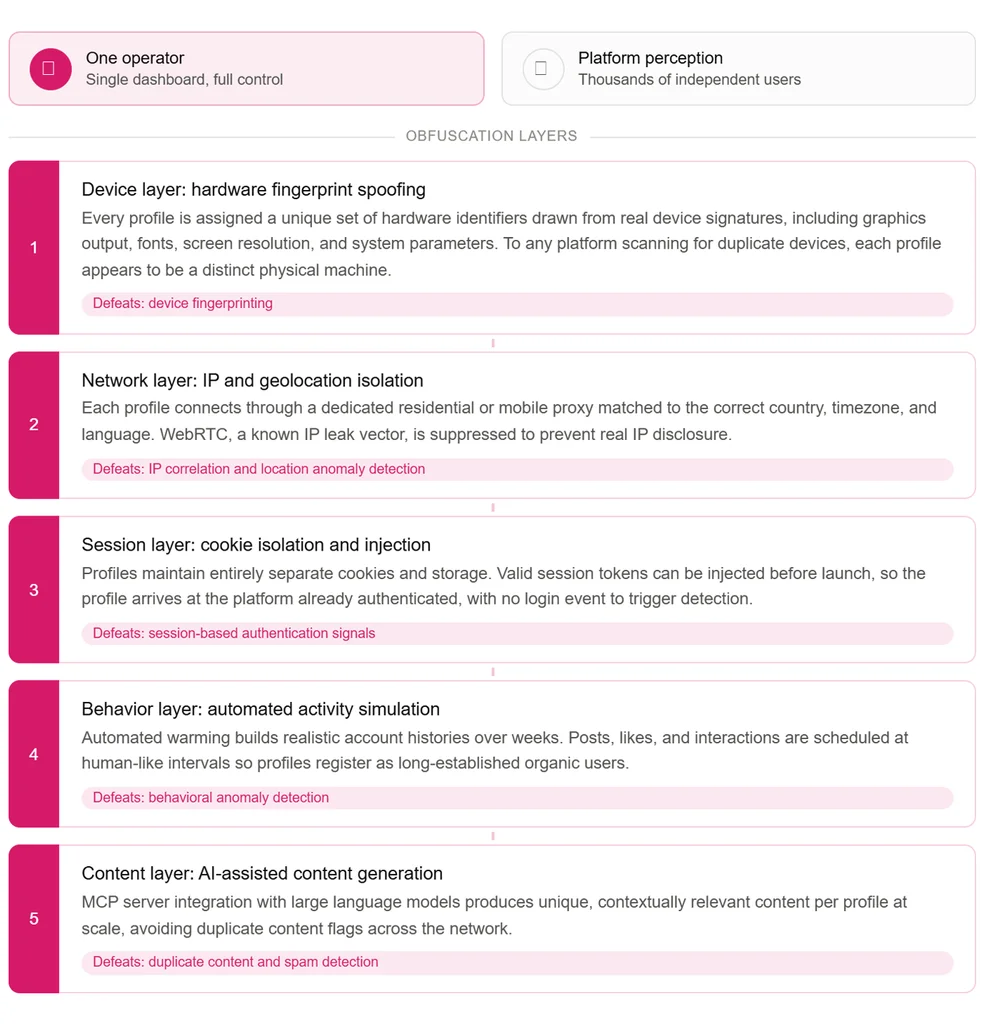
Figure 1 – The report maps five layers where antidetect browsers can interfere with platform detection.
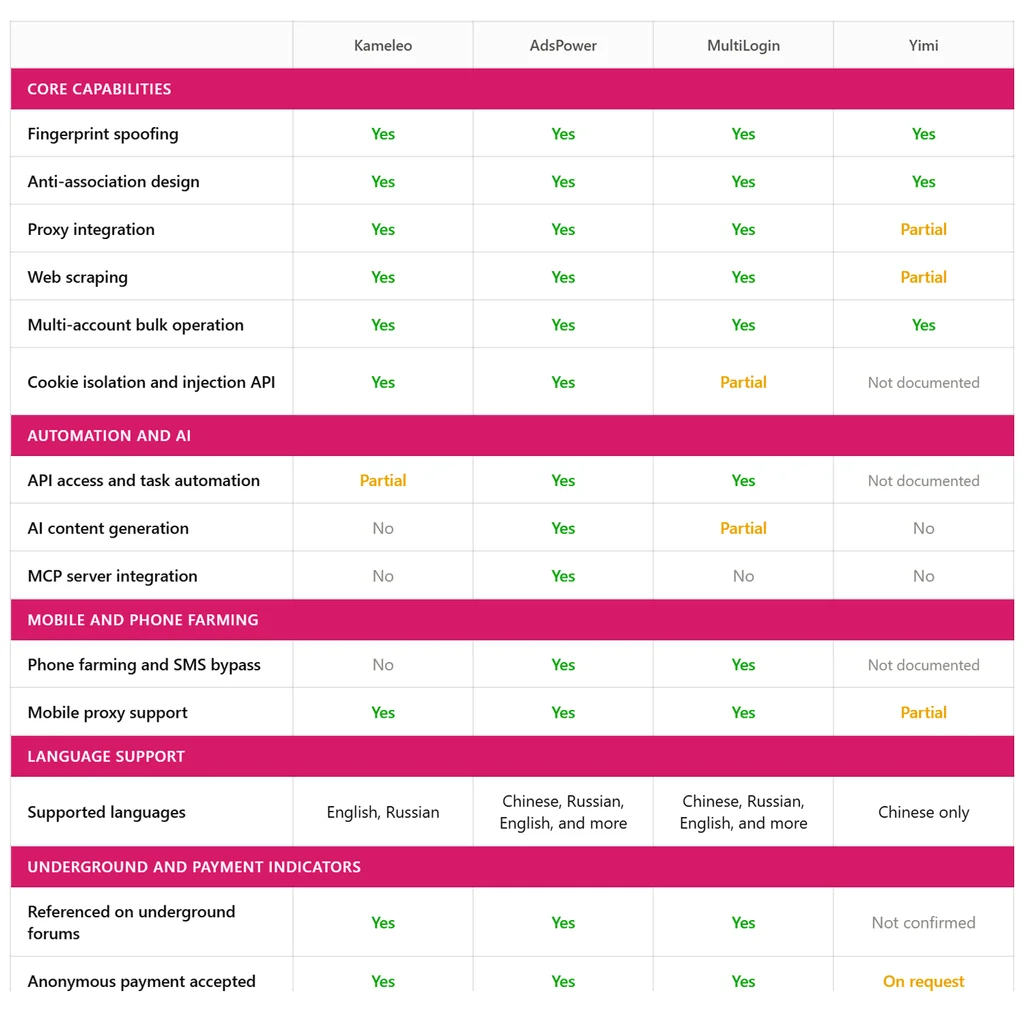
Figure 2 – A comparison of popular antidetect tools.
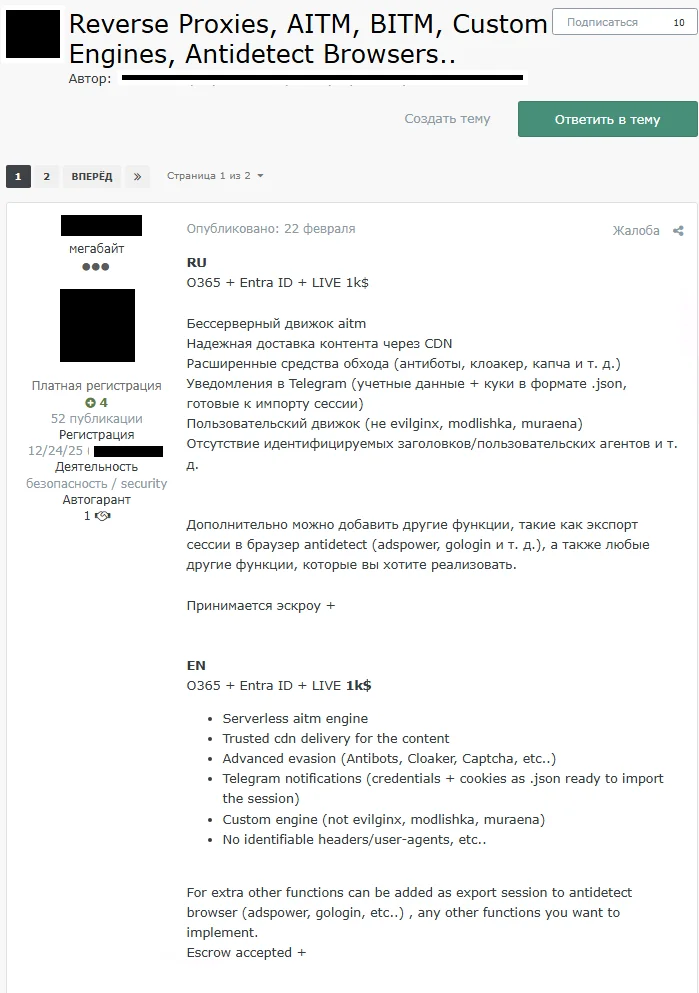
Figure 3 – An underground listing describes credential-harvesting software that can export captured session data into antidetect browsers.
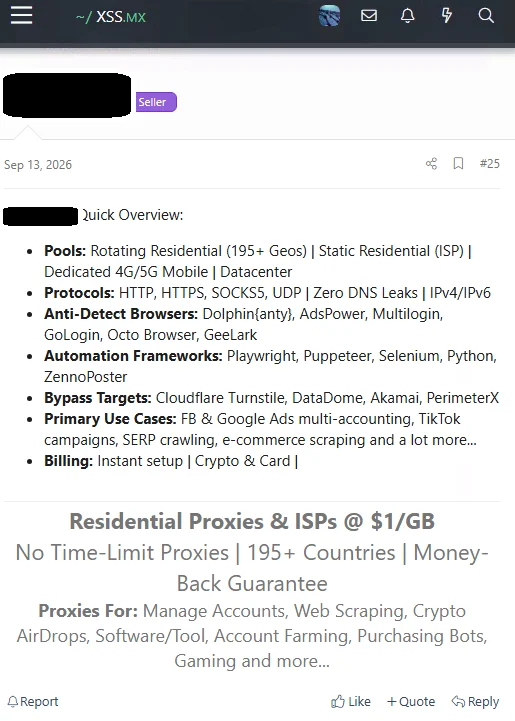
Figure 4 – A proxy listing presents Kameleo as part of a stack for managing many accounts.
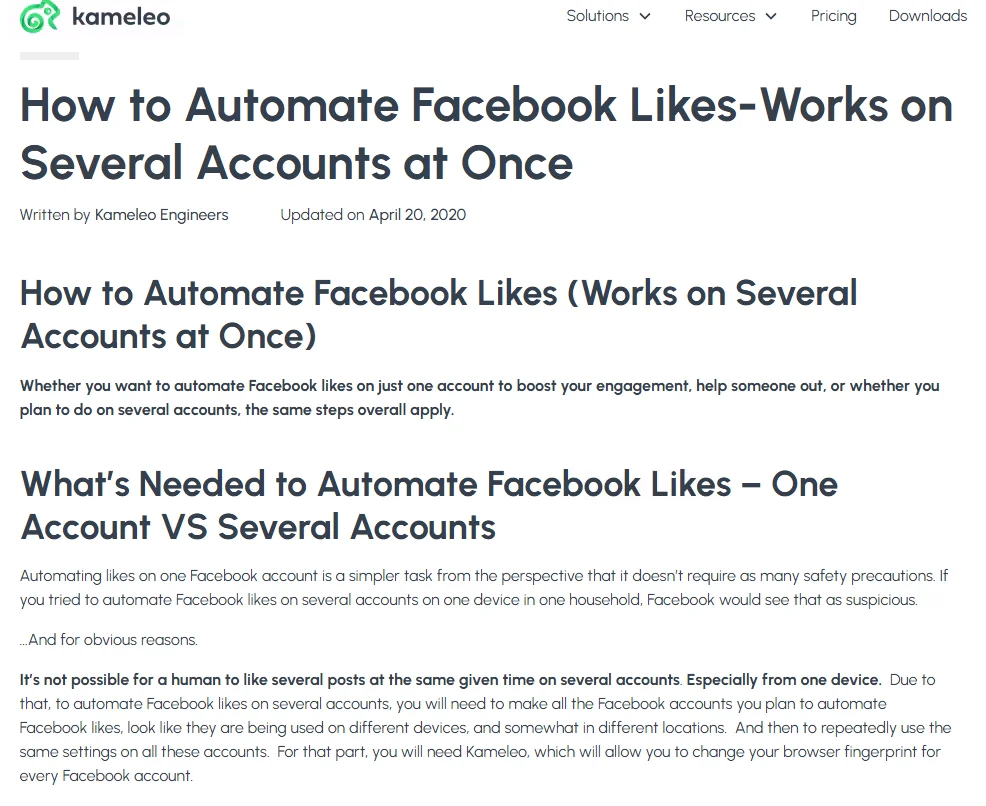
Figure 5 – Kameleo’s guide describes automating likes across multiple accounts with browser fingerprint controls.
The report also describes Kameleo appearing in phishing-kit discussions. The proposed workflow pairs a new browser profile with a proxy in the victim’s region, then relays credentials through an automated session. Its appeal to an attacker is coherence: the browser and network signals can resemble an ordinary local device. Services may still detect unusual access through other signals, but the method targets common checks around location and device changes.
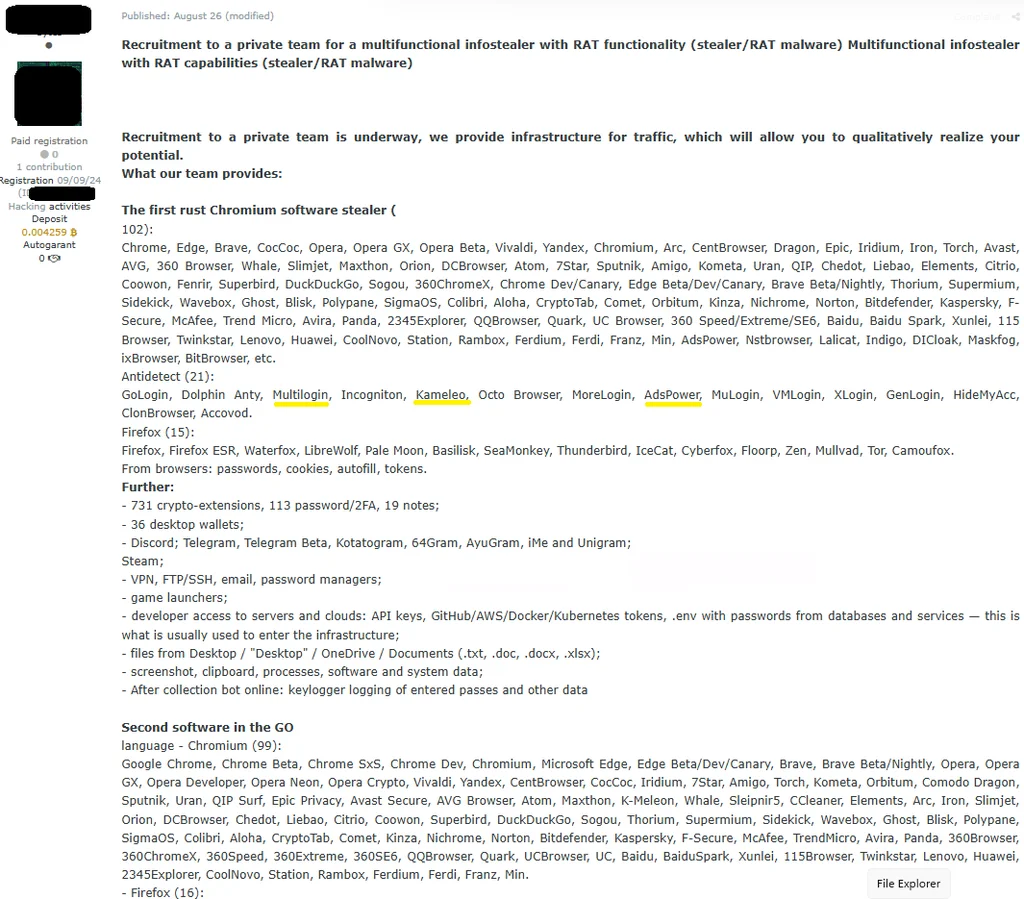
Figure 6 – A forum post lists Kameleo, AdsPower and MultiLogin among browser environments supported by credential-stealing software.
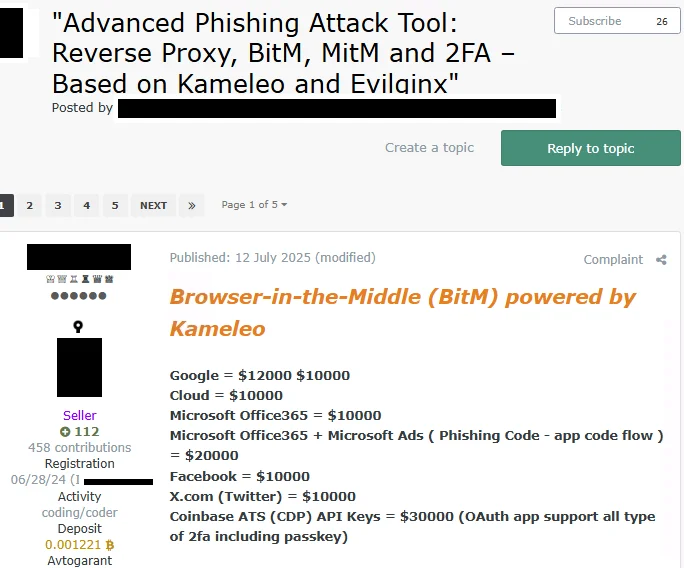
Figure 7 – A forum post describes using Kameleo in browser-based phishing workflows aimed at major online services.
AdsPower: profile scale and workflow automation
AdsPower offers configurable browser fingerprints across more than 20 parameters per profile, according to the report. Its interface connects profiles to third-party residential and rotating proxy providers. Operators can set WebRTC behavior, time zone, language and location, allowing the browser identity to match the assigned network route.
The product’s published pricing supports thousands of profiles, with larger arrangements available through enterprise sales. Its account editor covers services in social media, e-commerce, finance and professional networking. That range makes the software useful to businesses managing separate customer accounts, while also giving abuse operators a single place to organize large profile sets.
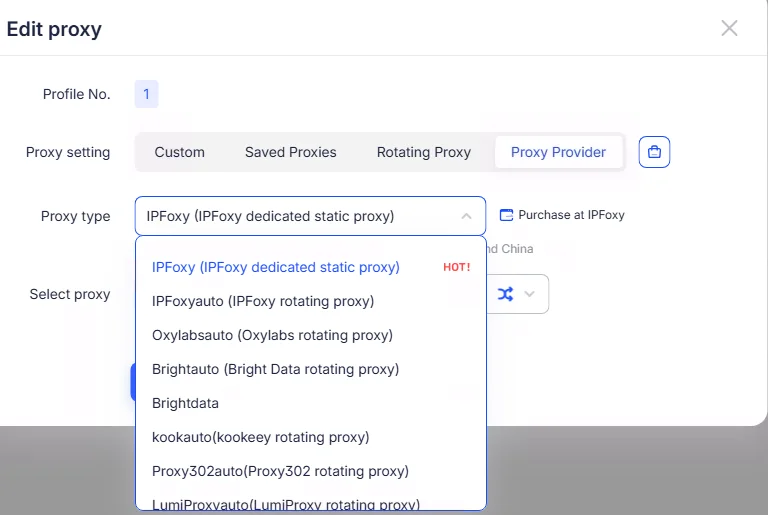
Figure 8 – AdsPower’s proxy interface lists residential and rotating providers that can be assigned to profiles.
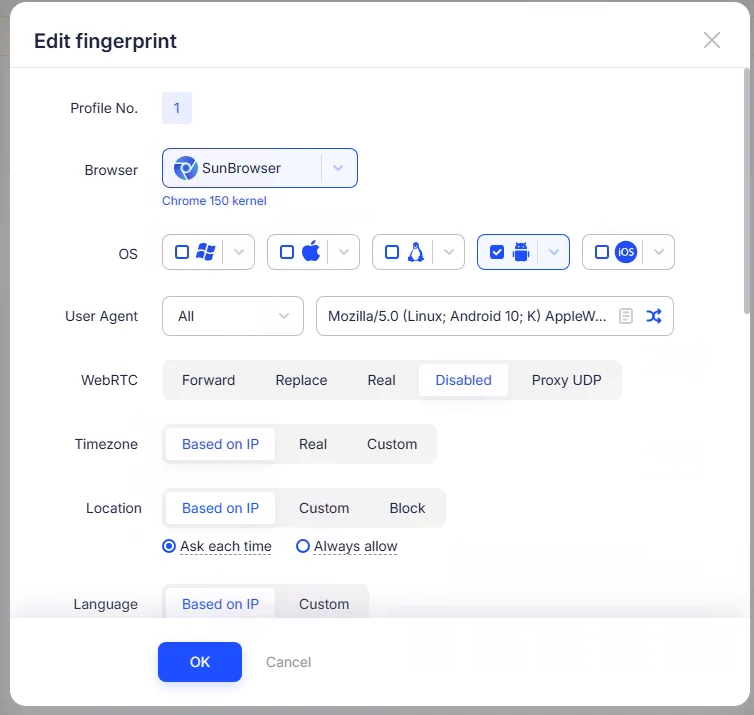
Figure 9 – AdsPower exposes profile-level settings for WebRTC, time zone and location.
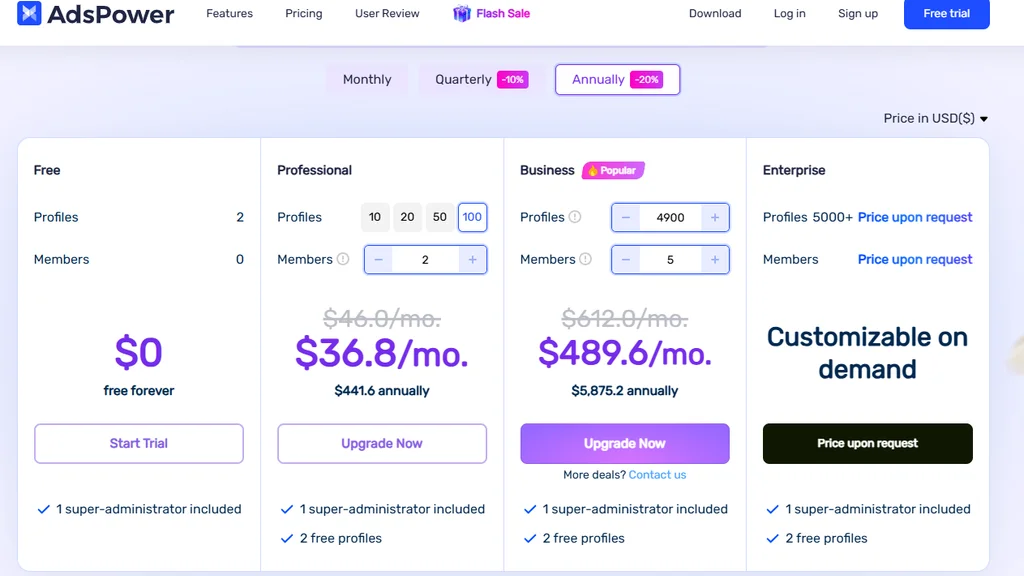
Figure 10 – AdsPower’s published plans include profile tiers reaching several thousand accounts.
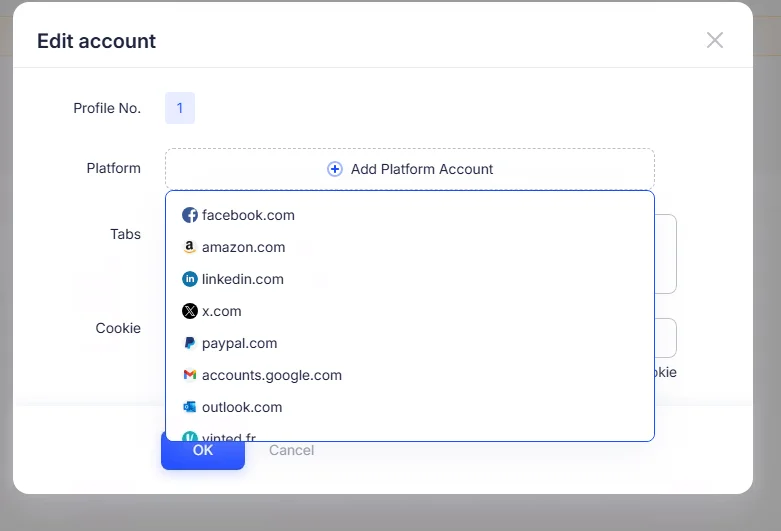
Figure 11 – The account editor covers services including Facebook, Amazon, LinkedIn, X, PayPal and Google.
AdsPower’s automation tools expand the scale of that profile management. Its RPA marketplace offers templates for likes, comments, direct messages and follower collection. A multi-window synchronizer can repeat an action across many profiles from one input. The report also describes account-warming automation, which simulates activity over a period of weeks before an account is put to work.
Warming is meant to make an account’s history look less abrupt. It can also make early-stage detection more difficult: an account that has accumulated ordinary-looking activity may not stand out when it begins interacting at higher volume. The quality of that history and the service’s own detection methods will affect whether the tactic works.
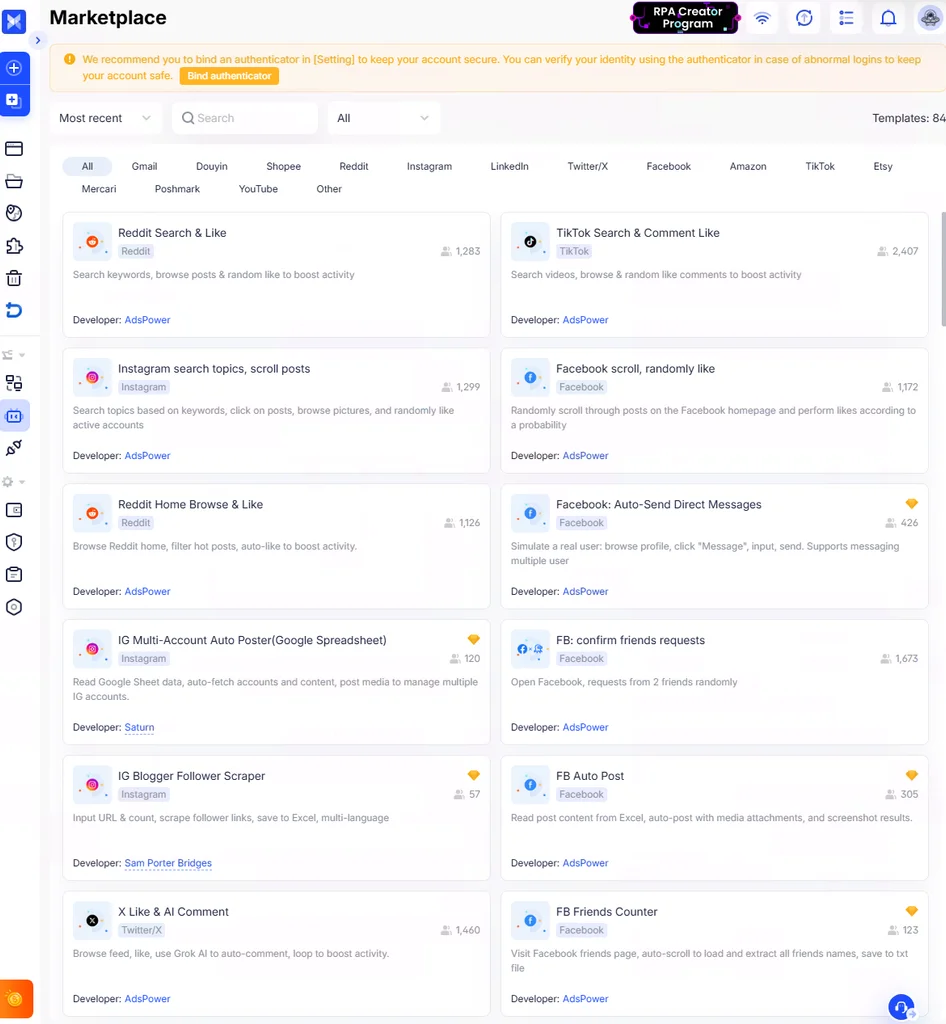
Figure 12 – AdsPower’s marketplace includes automation templates for engagement and account management.
The most notable addition is a dedicated Model Context Protocol server, which can connect AdsPower profiles to large language model workflows. The described pipeline can generate text, place it into prepared profiles and distribute it through automated workflows. A related Cookie Robot feature warms cookies on TikTok and X accounts before use. In practical terms, these integrations reduce the amount of manual work needed to coordinate profile setup, content creation and posting.
The report characterizes that combination as a way to run an operation without an active operator at each step. That is a plausible capability of linked automation, but the source provides no measured throughput or evidence that every stage can run unattended in every setting. The key shift is that content generation and account actions can now sit in the same workflow, shortening the path from a written prompt to activity across many profiles.
MultiLogin: desktop profiles and virtual phones
MultiLogin provides separate browser profiles with their own fingerprints, cookies, local storage and session data. Its documented automation support includes Selenium, Playwright and Puppeteer, tools commonly used to script browser tasks. The source also identifies discussion of MultiLogin on an underground hacking forum, indicating that the product is known in criminal communities.
The platform extends its profile model to cloud-hosted Android devices. Each virtual phone can maintain its own device parameters and proxy assignment. MultiLogin’s documentation says shared device signals, storage or network patterns can lead to account bans in phone-farming setups, and presents isolated profiles as a way to reduce those links. The same design can support legitimate testing and account management; it can also help create many accounts that appear to come from separate phones.
Partner integrations provide virtual phone numbers for SMS verification, according to the product material cited in the report. Pairing a number with a mobile profile can reduce the need for physical SIM cards when creating accounts. The source does not quantify how many accounts a customer can create this way or how services respond to virtual numbers, so the operational value will depend on each platform’s checks.
MultiLogin also advertises scraping tools and guides for services including Facebook, LinkedIn, Amazon and X. Its residential proxy features are presented as ways to avoid bot detection and IP-based rate limits. The product material lists ticket purchasing automation among its uses, and describes compatibility testing against major ticketing services. It also includes AI Quick Actions Automation. These features make the platform more than a browser-profile manager: they connect identity controls with scripted data collection and repetitive account actions.
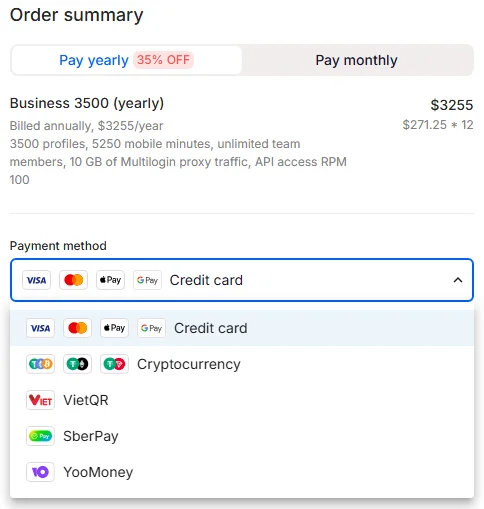
Figure 14 – MultiLogin’s checkout supports several payment methods.
The report notes that MultiLogin accepts credit cards, cryptocurrency and regional payment services, and offers around-the-clock customer support through Telegram. It also says the product is checked against more than 50 social platforms each day. These details suggest a maintained commercial service with ongoing compatibility work. They do not, on their own, establish how customers use the product or how well any specific profile avoids detection.
Scraping can make targeting more precise
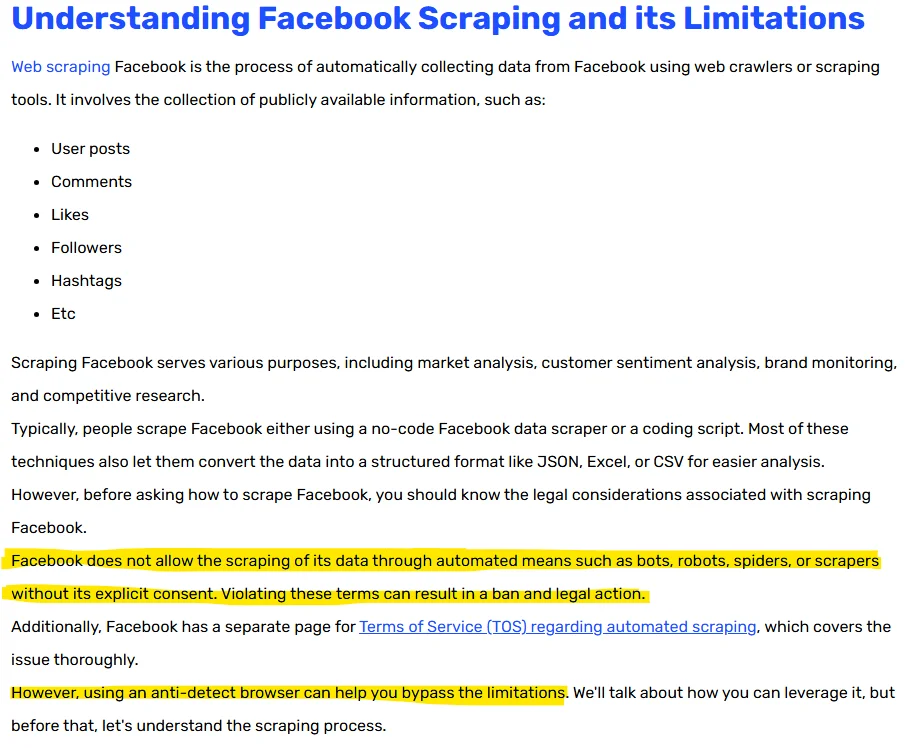
Data collection can supply the context for more tailored activity. The report describes scraping features that combine fingerprint rotation, CAPTCHA handling and headless browsing to collect information from social, retail and professional sites. AdsPower’s scraping guide acknowledges that collecting Facebook data can breach the service’s rules, then describes antidetect browsing as a way to work around limits.
The concern is how collected information might be used alongside warmed accounts. A hypothetical workflow begins with an account that has built a history through simulated activity. If accepted into a private group, it could collect visible information about members and their interests. An operator could then use that information to tailor messages or engagement to the group’s apparent preferences.
That sequence would make the activity more targeted than generic bulk posting. It could also create the appearance of peer agreement if multiple profiles reinforce similar messages. The source presents this as an operational risk, rather than documenting a specific completed operation using the full sequence. For teams defending online communities, access patterns and unusual collection behavior may therefore matter alongside the content itself.
A mature market lowers the operating burden
These products are sold as maintained software, with language support, product documentation, release notes, customer service and subscription pricing. AdsPower supports more than 20 languages. MultiLogin lists English, Chinese, Russian, Vietnamese and Portuguese, and says it checks compatibility across more than 50 services. Kameleo publishes technical material about handling bot defenses, including Cloudflare and DataDome.
The report also documents purpose-built Android identity tools sold in underground forums. One listing described automated location changes, device-ID replacement, Wi-Fi environment changes and Play Integrity bypass for 100 US dollars per month. Other posts offered farmed accounts for sale and instructed buyers to access them through antidetect browsers. These examples point to a market that sells both the tools and the accounts created with them.
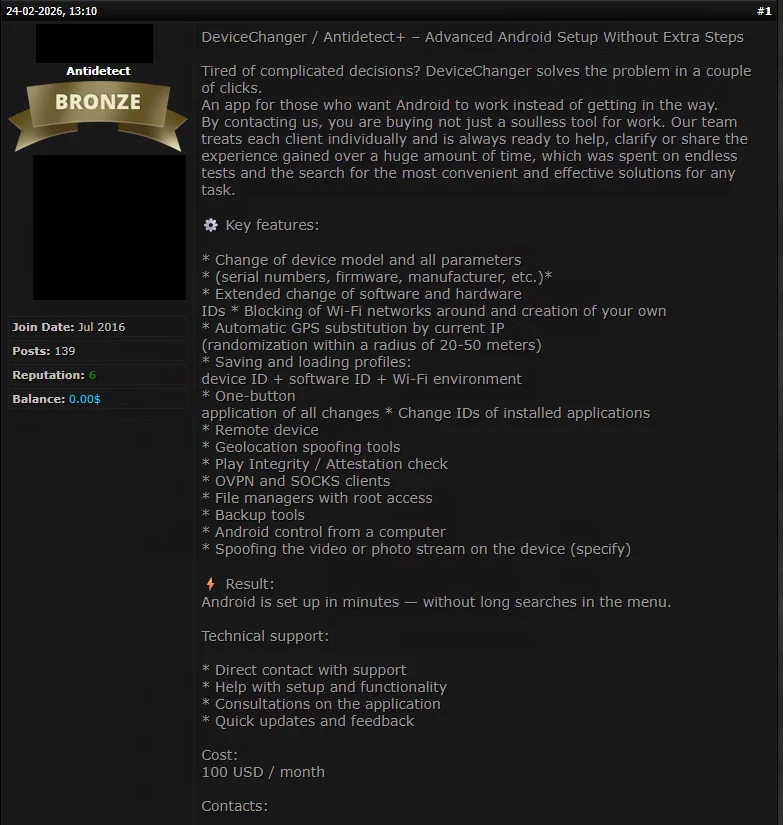
Figure 15 – An underground listing describes an Android-focused identity tool priced at 100 US dollars per month.
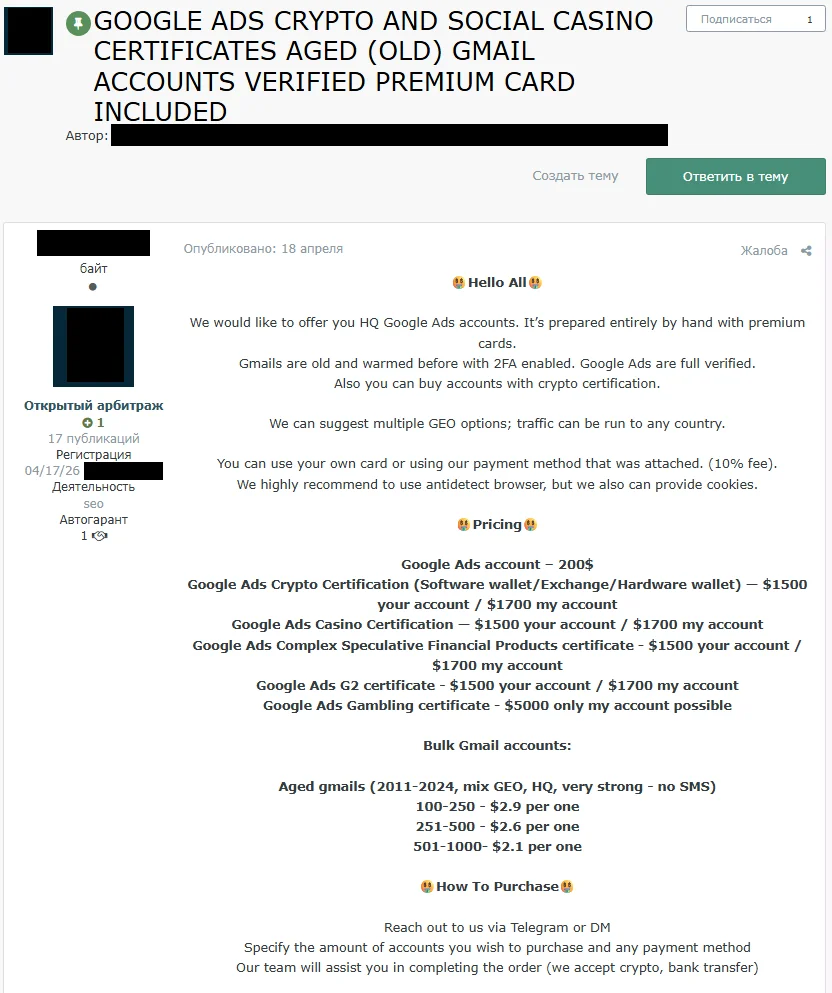
Figure 16 – Farmed Google Ads accounts are advertised for sale on an underground forum.
For a would-be operator, the change is practical: profile management, proxy configuration, browser automation and AI-assisted text generation can be purchased and connected without building those systems from scratch. A subscription does not remove the need to manage accounts, content and service-specific failures. It does lower the technical barrier and makes it easier for a small team to operate at a scale that once required custom tooling.
What defenders should watch
Security teams should review signals below the account behavior layer. Useful areas to examine include proxy networks operating across many accounts, repeated WebRTC suppression patterns, unusual cookie injection sequences and browser fingerprints that change in ways inconsistent with a real device. No single indicator is likely to settle the question; defenders will need to connect network, device and session events over time.
Account warming complicates that work because simulated activity can resemble ordinary use. Cross-checking whether a device identity remains consistent across sessions may help identify profiles that change fingerprints or network characteristics too neatly. Monitoring should also account for sessions that begin without a conventional login event, especially where cookies or tokens establish an already-authenticated state.
For social platforms, the report recommends examining antidetect products directly to understand their proxy use, fingerprint changes and automation patterns. Those observations could inform detection rules and account review. The challenge is keeping those rules current as browser tools and automation templates change.
Companies should include cookie theft and session transfer in their threat models and exercises. They can check whether session monitoring catches unexpected reuse, whether high-risk actions require renewed verification, and whether fraud systems still depend too heavily on stable device fingerprints. An attacker who can imitate a familiar device and region may evade checks built around abrupt location changes.
AI integration is the area to watch next. The source documents product features that connect language models to browser profiles and automated actions, but offers no independent measurement of their reliability or scale. The operational question is whether these links become easier to configure and maintain, and whether defenders can detect coordinated behavior through infrastructure and session evidence when each account has a plausible history.
Antidetect browsers do not make abuse inevitable, and their commercial availability does not establish harmful use by every customer. They do combine identity controls that can obscure links between accounts with automation that reduces repetitive work. For fraud and coordinated manipulation, that combination makes session integrity, network signals and long-term device consistency more important than a login check alone.
The post The Risk of AI-Powered Antidetect Browsers in Online Fraud and Influence Operations appeared first on Check Point Research.