Intel’s PC Forecast Sends Semiconductor Stocks Into a $1 Trillion Selloff
- Gate
- AI & ML
- Departs
- Crew
- [email protected] (Anton Shilov)
- Passengers
- 837
Intel’s weaker PC outlook helped drive a broad chip selloff, while Apple’s smaller decline showed how product mix can shape investor exposure.
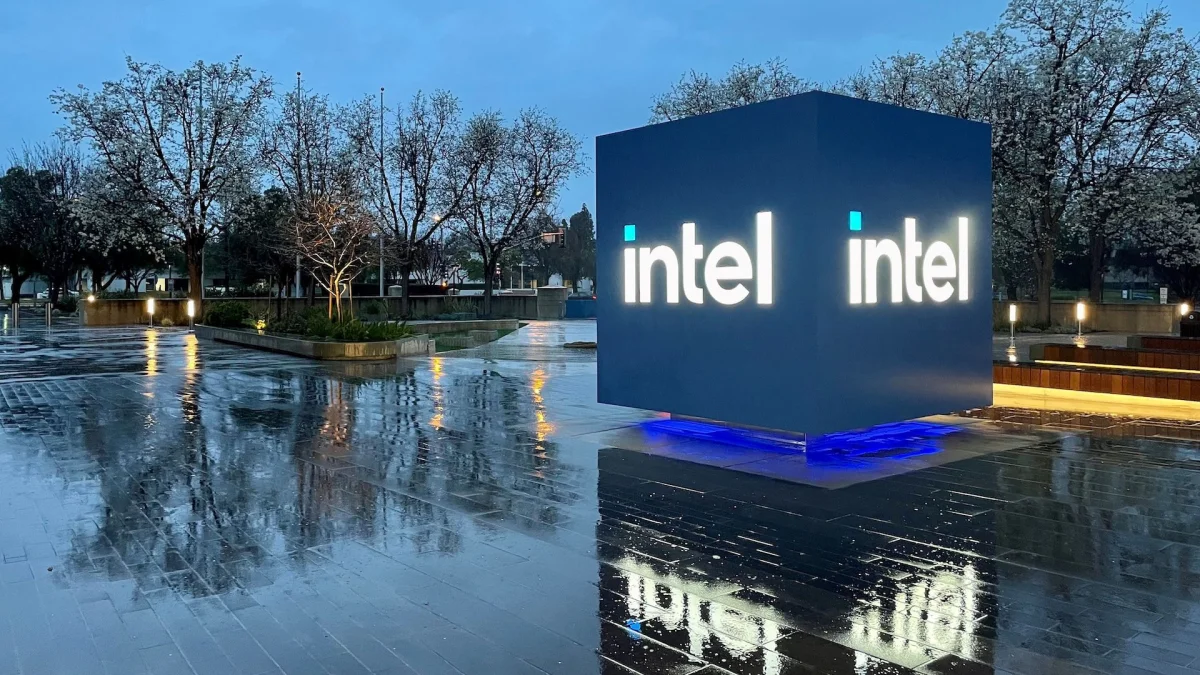
Intel’s warning about its PC business turned a weak forecast into a broad test of confidence in semiconductor growth. The company’s shares fell 30% on Friday, erasing nearly $150 billion in market value. Across the semiconductor sector, the losses added up to about $1 trillion in market capitalization, based on intraday estimates cited by Benzinga.
The scale of the selloff reflects two connected concerns: Intel expects PC demand to weaken, and investors are questioning how much capital the technology industry can keep directing toward data centers and AI infrastructure. Those issues affect different businesses in different ways, but Friday’s trading showed how quickly a disappointing forecast from a major chipmaker can reset expectations across the supply chain.
A broad selloff, with uneven costs
The PHLX Semiconductor Sector Index, which tracks 30 major semiconductor companies, dropped 9.14% on Friday. At 2:31 p.m. ET, it stood at 10,465.38 points, down 1,052.82 points. Intel’s forecast was the immediate trigger, but declines spread well beyond the company.
Arm fell 12.68%, AMD 12.48%, Qualcomm 12.14%, Applied Materials 8.73%, ASML 8.13%, Lam Research 8%, Micron 7.28% and Broadcom 7.1%. Nvidia’s shares declined 5.66%. That smaller percentage still amounted to about $270 billion in lost market value, more than Intel lost in dollar terms that day. A percentage drop and a dollar loss tell different stories: a modest move in a very large company can outweigh a much steeper move in a smaller one.
The selloff also reached companies that build server systems and provide cloud services. Dell fell 12.67%, HPE 8.10%, Supermicro 6.96% and Oracle 6.88%. Reuters reported that investors were increasingly questioning both the scale of spending needed to expand AI infrastructure and whether that spending can be sustained. That concern gives the day’s trading a wider context: the market was reassessing demand across PCs, chips and the systems built around them.
Why Intel’s PC outlook matters
Intel’s client computing and physical AI group, or CCPG, brought in $8.1 billion in third-quarter 2026 revenue. That was 5% below the same quarter a year earlier and 9% below the previous quarter. Processor shipments fell 14% year over year as demand weakened and competition increased. A 9% rise in average selling prices partly offset the shipment decline.
CCPG generated nearly half of Intel’s roughly $16.5 billion in total revenue, making its performance central to the company’s cash generation. Stronger demand for server processors can help, but Intel said it would only partly offset softer client sales. The company forecast fourth-quarter revenue of $15 billion to $16 billion.
Intel expects conditions in the client market to worsen in the fourth quarter of 2026 and continue deteriorating into 2027. Higher memory prices and shortages of other components can push up PC prices, putting pressure on buyers and manufacturers. Intel expects the client PC market to shrink 10% in 2027 compared with 2026. Its data center business is expected to grow that year, though supply constraints could limit how much demand the company can serve.
That combination puts Intel in a difficult position. Fewer client processor shipments weigh on a business that contributes a large share of revenue, while growth in data center processors offers a partial offset. The shift can also mean a different mix of products sold, but the source figures don’t establish how much that change will improve margins or cash flow. The next signals to watch are whether PC demand falls as forecast and whether supply limits ease enough for Intel to capture more data center demand.
A sharp reversal from June
Intel’s market value reached $673.43 billion in mid-June 2026, its highest level to that point, as data center CPU sales grew, client products sold well and the company returned to profitability. That profitability measure excluded a $12.5 billion non-cash accounting charge related to issued shares.
Since mid-June, Intel’s market capitalization had fallen by nearly half, to $338.91 billion. The Friday decline accounted for $148.68 billion of that loss. The swing shows how quickly confidence can change when a company’s outlook depends on a large consumer-facing business exposed to component costs and purchasing decisions. Intel’s own outlook also leaves open a central question: can server growth compensate for a weaker PC market while supply remains constrained?
Why Apple took a different hit
Apple’s shares fell 1.66%, a far smaller decline than most chip stocks. The contrast with Intel is striking because Apple sells consumer devices that also depend on processor and memory supply. Apple designs its own processors and sells them inside finished products, so its revenue comes from the whole device rather than from selling a processor to a PC maker. Its iPhone demand also follows a different replacement cycle from demand for PCs.
Those differences can change how component price increases affect each company and when the effects show up. Apple is also a major customer of TSMC, so its supply chain intersects with those of other chip designers. Yet overlapping suppliers do not mean identical exposure: product mix, customer demand and the portion of each device’s value captured by the company all matter.
Apple’s limited decline suggests that Friday’s trading was not a simple rejection of every company connected to semiconductors. Investors appeared more focused on expected growth and profitability, including how exposed each business is to higher component costs and uncertain infrastructure spending. Intel’s next results will show whether its client market weakens as forecast and whether data center demand can make up enough ground.
- Intel VP Robert Hallock sets Nova Lake expectations, teases return to Raptor Lake for DDR4 platforms
- CPU scaling with DLSS
- Intel's one-two punch plan in desktop CPUs is taking shape
- Benchmarking AMD's BC-250, offering Steam Machine-like performance at half the price
- AMD splits Zen 7 into three EPYC families for 2028 and starts selling server CPUs by the agent