Anduril’s BlueChip Laptop Targets U.S. Manufacturing With Snapdragon X
- Gate
- AI & ML
- Departs
- Crew
- [email protected] (Jowi Morales)
- Passengers
- 355
BlueChip is aiming for laptop orders in 2027, with U.S. and allied suppliers covering 90% of component procurement costs in its prototypes.
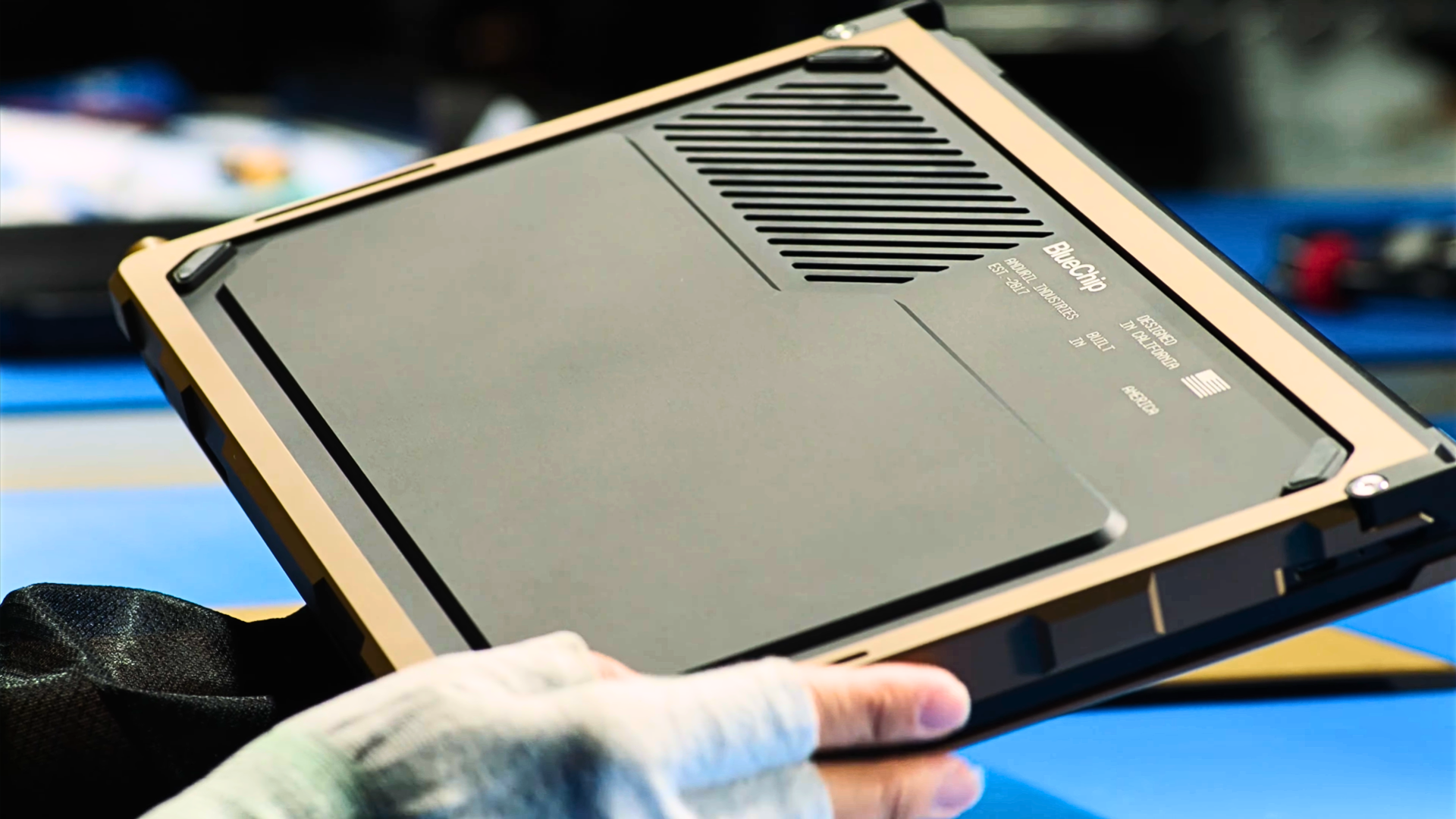
Anduril’s BlueChip laptop project puts supply chain design at the center of the product. The company says it has working prototypes and plans to begin taking orders in 2027. Its first machines will use a Snapdragon X Series processor, while the components in those prototypes already draw 90% of their procurement cost from suppliers in the United States and allied countries.
That figure leaves a meaningful gap between the current design and Anduril’s longer term goal: an entirely domestic supply chain. The company says overseas suppliers still make many of the parts needed for a complete computer, including circuit boards and displays. BlueChip therefore starts as a staged manufacturing effort, with sourcing and production shifting over time rather than arriving fully domestic at launch.
A laptop built around its supply chain
Anduril says U.S.-made elements in the prototype include the battery, outer casing and screen glass, alongside domestically produced semiconductors. Those details matter because assembling a laptop in one country does not mean its components come from there. A computer depends on a web of specialized suppliers for materials, chips, displays, batteries and circuit boards, and each part can have its own production constraints.
Founder Palmer Luckey framed the distinction in a company video: “Other companies might design their computers in the U.S., Anduril makes them here.” He also pointed to the materials behind the device, saying the company is using metals that U.S. industry can extract, refine, process and mill at scale and at a reasonable price. He made a similar point about battery technology.
For buyers, the sourcing plan could affect more than where a laptop is assembled. A shift toward local suppliers may make the origin of components easier to trace and reduce reliance on overseas production. But the 90% figure is based on procurement cost, not the share of components by count, and it covers both U.S. and allied-country suppliers. It does not show how much of the prototype is sourced solely from the United States.
Cost and customer fit remain open questions
Luckey has previously said a fully U.S.-made laptop could cost 20% more than a comparable device. That estimate gives buyers a rough sense of the possible premium, but the company has not provided BlueChip pricing or detailed specifications. The final cost will depend on the product configuration and on whether the supplier base can meet production needs at the required price.
Anduril appears to be aiming first at customers in fields such as defense, emergency response and public safety, where buyers may place a high value on knowing where equipment and components come from. That is a plausible starting market for a laptop with a higher price, but the company has not detailed its intended configurations, support terms or compatibility plans.
The choice of a Snapdragon X Series processor identifies the core computing platform, but it does not answer practical questions about performance, battery life, repairability or software support. Those details will matter to technical buyers weighing the device against established laptops. Teams considering a switch will also need to understand how BlueChip handles their existing applications, peripherals and deployment workflows.
The hard part is building the supplier base
Anduril describes domestic production as a phased effort: broaden local sourcing and manufacturing, reduce dependence on foreign suppliers, then work toward an end-to-end U.S. supply chain. Its own account acknowledges why that progression matters. Building finished computers requires a broader industrial base that can consistently produce displays, circuit boards, batteries and other components.
New chip manufacturing capacity in the United States could help expand the pool of nearby suppliers, and industrial development around chip production may support companies that provide materials and parts. But a laptop supply chain reaches beyond processor fabrication. A nearby chip plant does not automatically provide a local source for every component, nor does it establish that suppliers can deliver them at the quality, volume and cost a laptop maker needs.
That makes BlueChip’s sourcing milestones more revealing than a broad claim about where the laptop is made. Buyers should watch for details on which parts are domestic at order time, which still come from allied countries or elsewhere, and how the company measures progress toward its stated goal. They should also look for a final price and product specifications before judging the cost premium against the practical value.
BlueChip has prototypes and a named processor platform, but its commercial case is still taking shape. The project will be easier to assess once Anduril explains what customers can order in 2027, how the supply mix changes across product versions, and what tradeoffs the sourcing plan brings to price and support. For now, its clearest distinction is a laptop program designed to build its supplier base alongside the computer itself.