Elastic AIOps: Forrester Recognizes Explainable AI and OpenTelemetry Support
- Gate
- AI & ML
- Departs
- Crew
- Natalie Blake
- Passengers
- 798
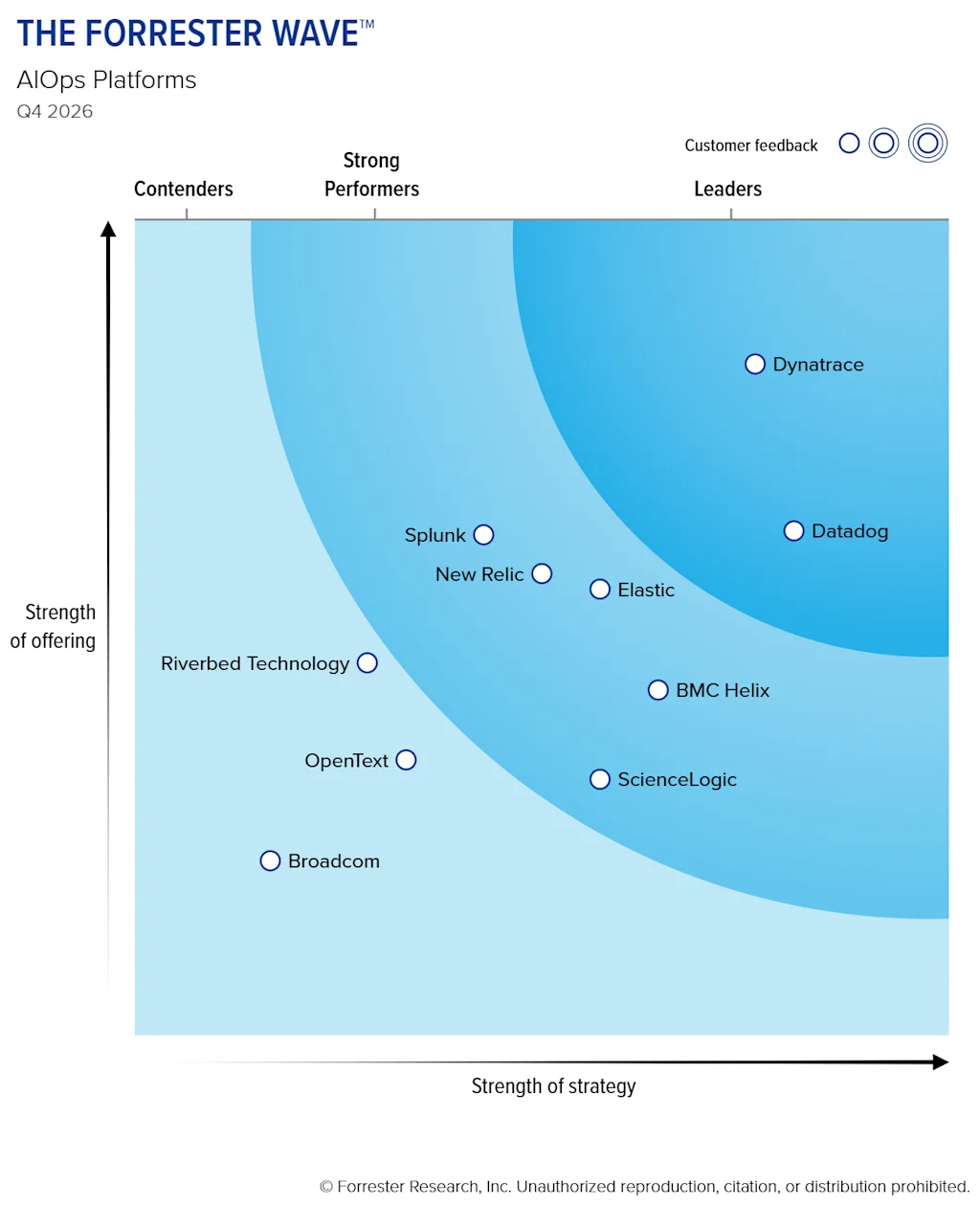
Forrester named Elastic a Strong Performer among 10 AIOps providers, citing explainability, OpenTelemetry support, deployment options and pricing flexibility.
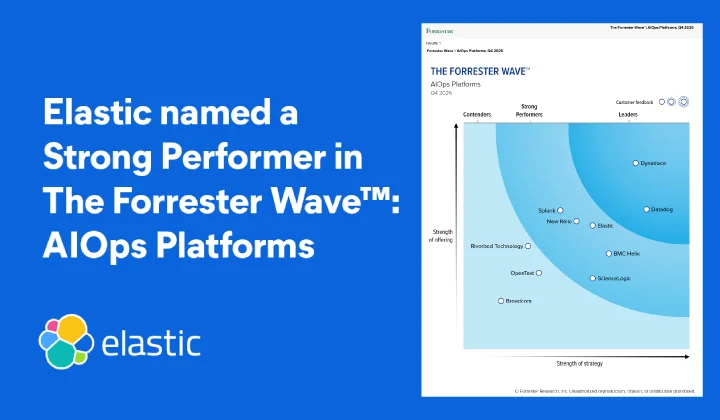
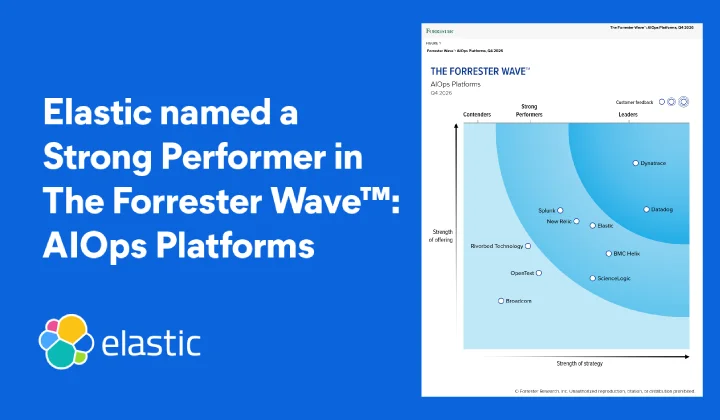
Elastic’s AIOps approach puts a practical question at the center: can an engineer inspect an AI system’s incident analysis and decide whether to act on it? That focus on verifiable reasoning, broad telemetry context and open data formats sits behind the company’s recognition as a Strong Performer in The Forrester Wave™: AIOps Platforms, Q4 2026.

The report assessed 10 providers against 24 criteria. Elastic says it received the highest possible scores in five: algorithmic trust and explainability; observability as code and GitOps alignment; AI stack and semantic observability; sovereign deployment and data isolation; and pricing flexibility and transparency. Those scores describe Forrester’s assessment against its criteria, while Elastic’s account of how its product works comes from the company itself.

Make the investigation inspectable
Elastic’s central product claim is that an AI SRE should show its work. Its [Elastic nightshift AI SRE](https://www.elastic.co/observability/ai-sre) is described as an always-on assistant that investigates operational issues and presents its reasoning, the data it examined, alternative explanations it considered and the evidence behind its conclusion. Engineers can review that trail before approving an action.

That design addresses a real operational constraint: a plausible diagnosis is not enough if responders cannot see how the system reached it. An inspectable investigation gives an engineer a way to challenge assumptions, check whether the supporting signals fit the incident and decide whether a proposed next step is appropriate. The source does not detail how the system ranks competing explanations or measures the accuracy of its recommendations, so those remain useful questions for teams evaluating it.

The product also aims to learn from previous investigations, carrying knowledge from earlier incidents into later ones. In principle, that can help the system recognize recurring problems faster. The practical value will depend on how well it retains relevant history and adapts when infrastructure or application behavior changes; Elastic’s description does not provide measured results for either.

Telemetry coverage shapes the answer
AI analysis depends on the evidence available to it. Elastic argues that teams often reduce the amount of telemetry they retain to manage storage costs, potentially leaving an investigation without the signals needed to explain an incident. Its pitch is to make it more affordable to keep logs, traces and metrics together, then give the AI access to a broader operational picture.

The company points to storage options for [logs and traces](https://www.elastic.co/observability-labs/blog/elasticsearch-logsdb-index-mode-storage-savings) and [metrics](https://www.elastic.co/elasticsearch/metrics). Keeping these data types available in one place can help responders follow a problem across services and infrastructure. It may also reduce the need to piece together evidence from separate tools, although the source does not quantify storage savings or describe migration requirements for existing monitoring setups.

More data alone doesn’t guarantee better reasoning. Elastic says it distills information about a customer’s environment into [compact context](https://www.elastic.co/observability-labs/blog/elastic-knowledge-indicators-log-extraction) for the SRE agent. The aim is to make relevant details available without sending an unnecessarily large volume of information into each analysis, improving what the company describes as accuracy and token efficiency. For practitioners, the balance matters: context needs to be small enough to process efficiently while retaining the details that distinguish one service or failure mode from another.

Finding failures beyond existing alerts
Alert driven systems are strongest when teams already know what failure looks like and have written a rule to detect it. Elastic says its AI SRE is also designed to surface issues that don’t match an existing alert, including events its teams couldn’t anticipate when they set up detection. That could broaden incident discovery, but it raises a familiar operational question: how will teams distinguish a useful new signal from noise? The source doesn’t give a false positive rate, detection comparison or other measure of this capability.

For companies considering the product, evaluation should include how its findings fit into current incident workflows: what evidence responders can inspect, how recommendations are reviewed, and how previous investigations inform later ones. Those details will determine whether the assistant helps teams resolve unfamiliar incidents or adds another stream of findings to triage.

Open formats and deployment choices
Elastic says its observability tooling is built around [OpenTelemetry](https://www.elastic.co/observability/opentelemetry) and keeps data in its native form. The practical case for that approach is portability: teams can adopt new instrumentation without first rebuilding pipelines or translating schemas for a closed data format. Open standards can make future tool changes less disruptive, though the source doesn’t specify compatibility details for particular integrations or existing deployments.
Forrester’s cited criteria also include sovereign deployment and data isolation, but Elastic’s article gives little detail on the available deployment configurations or their tradeoffs. Buyers will need to confirm which options fit their environments and how each affects data access, operations and cost. Pricing flexibility and transparency received a top score from Forrester, according to Elastic; the source doesn’t include price points or a cost comparison.
What the recognition tells buyers
The evaluation highlights a connected set of product priorities: retain enough telemetry to preserve incident context, give the AI focused information to analyze, and make its reasoning visible to engineers. OpenTelemetry support and deployment choices address another buying concern: how readily teams can fit the platform into their existing systems and keep options open.
These are meaningful design signals, but recognition alone can’t show how the platform performs in a particular environment. Teams should assess the investigation trail against real incidents, test how it handles unfamiliar failures, and check whether storage economics support retaining the data their responders need. Elastic says the full Forrester report is available, and describes nightshift AI SRE as correlating telemetry in real time so engineers can examine likely causes and approve actions. Its next test is showing that this workflow holds up across varied production systems.