Sunlu AMS Lite Filament Heater Review: Integrated Drying for Bambu Lab
- Gate
- AI & ML
- Departs
- Crew
- Craig Couden
- Passengers
- 351
Sunlu’s $130 heater adds temperature and humidity control to the Bambu Lab AMS Lite, but shared heating and limited access may complicate mixed-material setups.
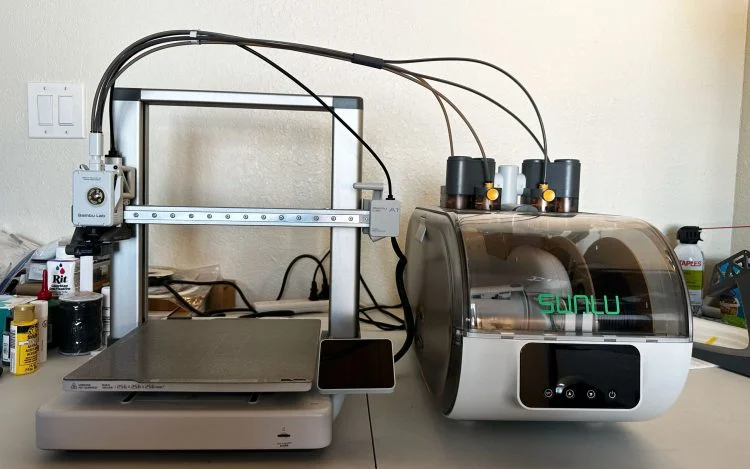
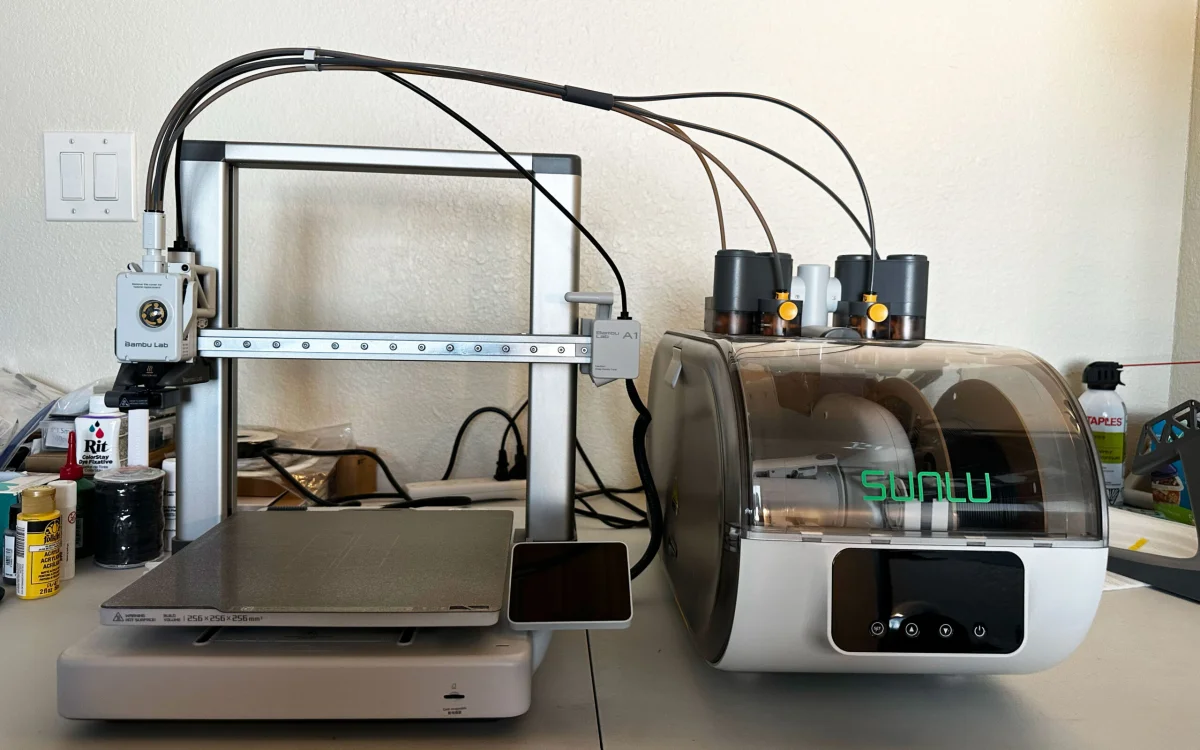
Sunlu’s AMS Lite Heater adds active filament drying to Bambu Lab’s AMS Lite without requiring a separate drying cabinet. At $130, its appeal is integration: the heater sits within the existing setup and can keep drying filament while a print runs. The trade-offs are equally specific. It works only with the AMS Lite, needs room for its doors and filament loading, and heats all loaded spools together.
That last point matters more than the feature list. The unit offers presets for six filament types, but those presets can’t solve the problem of storing materials with different temperature needs in one heated enclosure. For someone who mostly prints one kind of filament at a time, the heater looks like a tidy way to manage moisture. For a user who keeps PLA, PETG and other materials loaded together, it calls for more planning.
Adding heat to an existing AMS Lite
The heater is designed to fit into the AMS Lite assembly rather than operate as a standalone cabinet. Installation involves separating parts of the AMS Lite, replacing a few screws and connecting two wires. The setup may look more involved at first glance than it proves to be, though a couple of screw holes didn’t line up perfectly during assembly, and replacing one plastic cover took some patience.

Once installed, the AMS Lite remains powered by the printer, so the feeder can still be used without switching on the heater. The heater itself can also run when the printer is off. That separation gives owners a choice: use the AMS Lite for feeding filament as usual, or run a drying cycle when printing isn’t underway.
The practical change is that drying no longer has to happen in a separate box before a spool goes into the printer. Sunlu’s unit is intended to dry filament ahead of use and continue managing moisture during printing. That may suit people who print in humid conditions or who want fewer steps between storage and a job. It won’t make the AMS Lite compatible with other printer systems, however; the design is tied to Bambu Lab’s AMS Lite.
Controls and day-to-day operation
Sunlu provides six presets for PLA, PETG, TPU, ABS, PA (nylon) and PC (polycarbonate). Users can also set a temperature from 35°C to 70°C and choose a humidity target between 25% and 50%. A timer controls the heating period; it defaults to six hours, after which the unit switches to maintaining the selected humidity target.
In use, the exterior became warm but not hot enough to burn, and the heater didn’t noticeably warm the surrounding office. It was also fairly quiet. Those observations make it seem workable on a desktop, though they don’t establish how it performs in every room or over longer periods.
The unit takes up about as much space as the AMS Lite, preserving roughly the same desktop footprint for the printer-and-feeder setup. That’s a useful design choice for owners who don’t have room for a separate drying cabinet. Still, equal footprint doesn’t mean the heater needs no extra clearance: its doors fold down, and users need space at the side to load or remove spools.

Results depend on the filament and room
The reviewer didn’t see a major improvement in print quality, but reported few humidity-related problems in the San Francisco Bay Area. That’s a useful qualification: a modest visible change in a relatively dry environment doesn’t establish how the heater will perform where ambient moisture is higher. The strongest case is likely for users whose filament absorbs enough moisture to affect printing, with ongoing drying potentially helping during longer jobs.
The source includes comparisons of regular and dried filament prints across Polymaker PETG, Bambu Lab PETG HF, Polymaker PLA Pro and Sunlu PLA+ 2.0. They illustrate the materials tested, but no numerical measurements or controlled performance results are provided. Buyers should treat the review as a hands-on account, not a quantified comparison of drying time or print quality.

Mixed spools are the main constraint
Because the heater warms the loaded spools together, material choice affects whether it’s sensible to leave multiple types in the AMS Lite. Different filaments call for different drying temperatures. A setting suited to PETG could be too hot for PLA, with the reviewer warning that a PLA spool might melt and fuse under those conditions.
That makes the presets most useful when the loaded spools can share a suitable temperature. Owners who routinely keep several materials ready may need to remove or swap spools before heating, rather than assume each preset will safely handle every position independently. The review doesn’t describe separate temperature zones, so users should regard the chamber as a shared environment.
Loading also takes some thought. The doors need space to fold down, and the short PTFE tubes in the reviewer’s Bambu setup made it awkward to reach the side nearest the printer. Turning the whole unit provided access, but that’s a small recurring inconvenience to account for when arranging a desktop.
Who should consider it
The Sunlu AMS Lite Heater looks most useful to Bambu Lab A1 owners who already use the AMS Lite, have room to open its doors, and want drying integrated into their printing routine. Its controls, modest footprint and ability to operate with the printer off are practical advantages. The $130 price buys a dedicated accessory, not a general-purpose dryer for other systems.
For users in drier conditions who already get reliable prints, the benefit may be difficult to see. For those dealing with moisture-sensitive filament, continued drying while printing could be more compelling, but the review offers no quantified results to predict the improvement. Before buying, check whether the materials you keep loaded can tolerate the same heating conditions and whether your workspace leaves enough room for access. Those details, more than the preset count, determine whether this integration fits a particular workflow.
Price: $130
Manufacturer: Sunlu
Product: Sunlu AMS Lite Heater